
Selected Works
A tailored selection from our exhibitions and shows.
A selection of works from the collection, spanning the Dutch Golden Age, nineteenth-century France and the early twentieth century. Each is offered with full provenance and condition details. Prices on request.
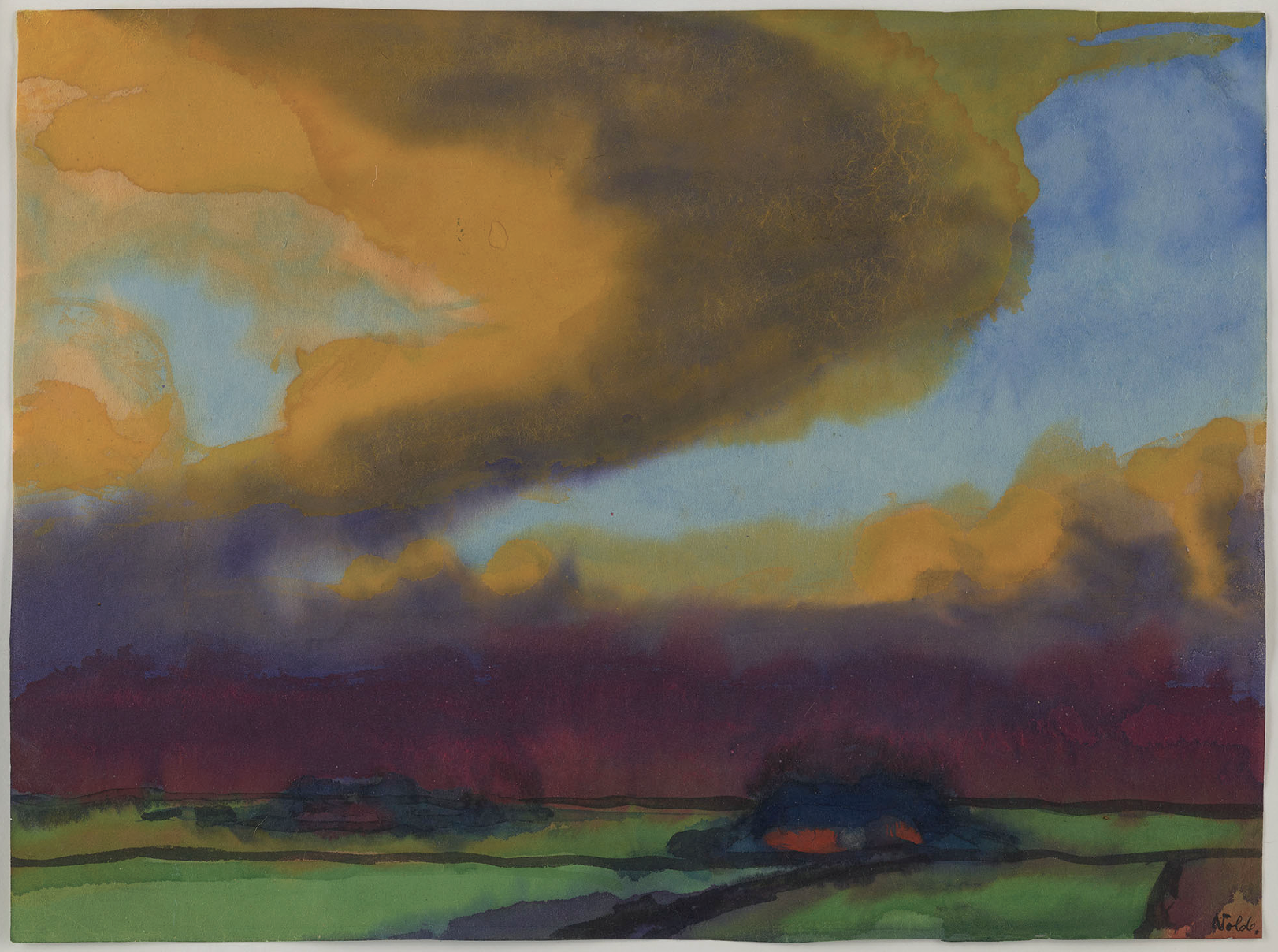
Emil Nolde
(1867 - 1956)
Marschlandschaft mit Gewitterhimmel
Executed circa 1930-1935.
Watercolour on paper, 33 × 45.5 cm.
Signed lower right: Nolde.
Emil Nolde was one of the leading German Expressionists, a member of the Dresden group Die Brücke in 1906 and 1907 and thereafter a painter who worked largely alone. From 1927 he lived at Seebüll, on the marshland of the German-Danish border, where the present watercolour was painted in the early 1930s. It shows a thunderstorm gathering over the flat land, the sky occupying most of the sheet in yellow, ochre, violet and indigo, with the marsh reduced to a strip of green and a few red roofs. A characteristic sheet from the years in which Nolde’s watercolours were at their freest.
Provenance. Galerie Raymond Thomas, Munich; Charles Tabachnik, Toronto (sale: Sotheby's, New York, 19th November 1986, lot 14); Sotheby's, Impressionist & Modern Art Day Sale 09/02/2012 L12005, lot 161.
Literature. Avant-Garde and Europe / Avantgarde und Europa. Catalogue of the exhibition. Hagen, 2023. Reproduced on page 52.
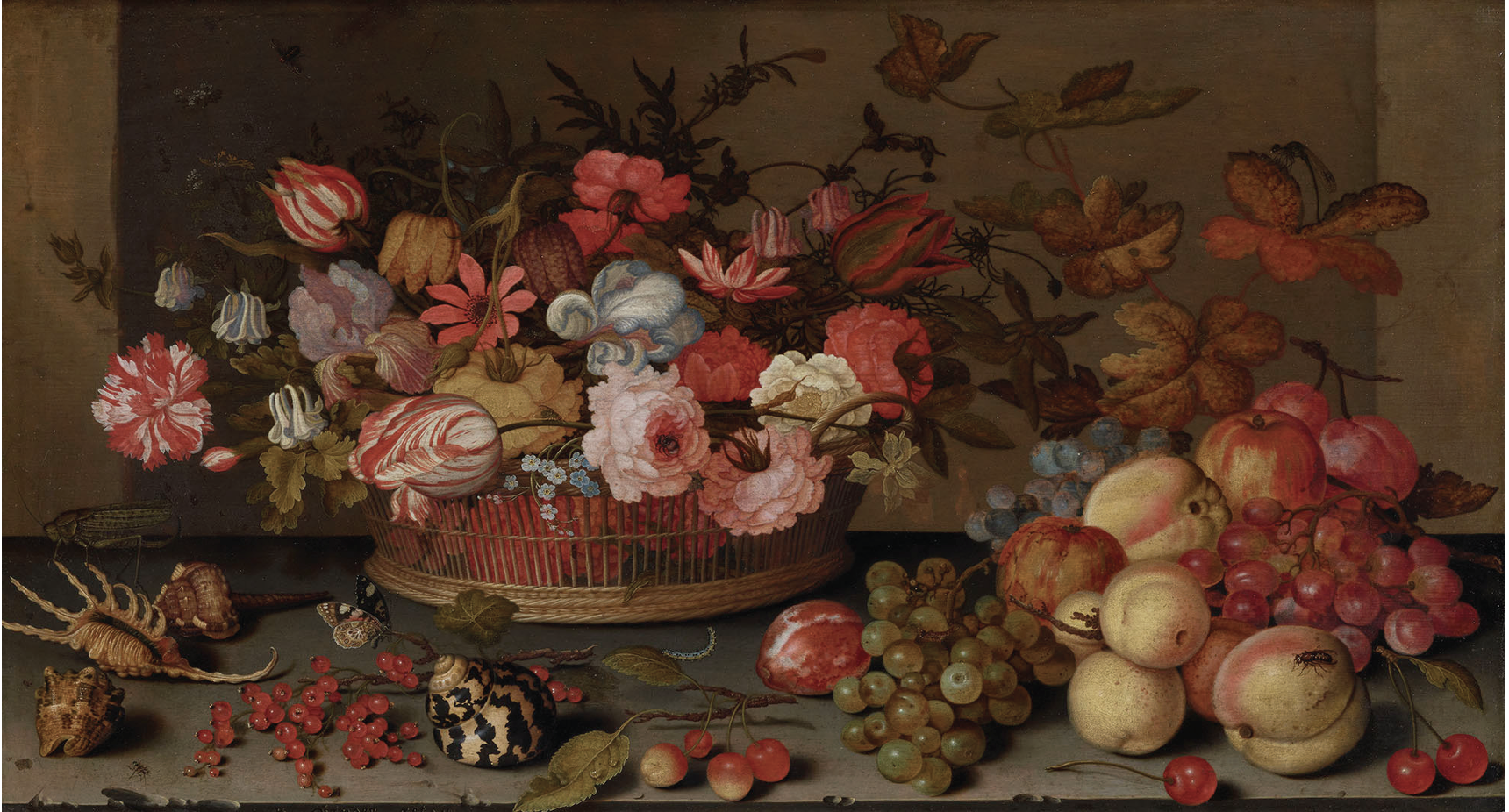
Balthasar Van Der Ast
(Middleburg 1593/94 - 1657 Delft)
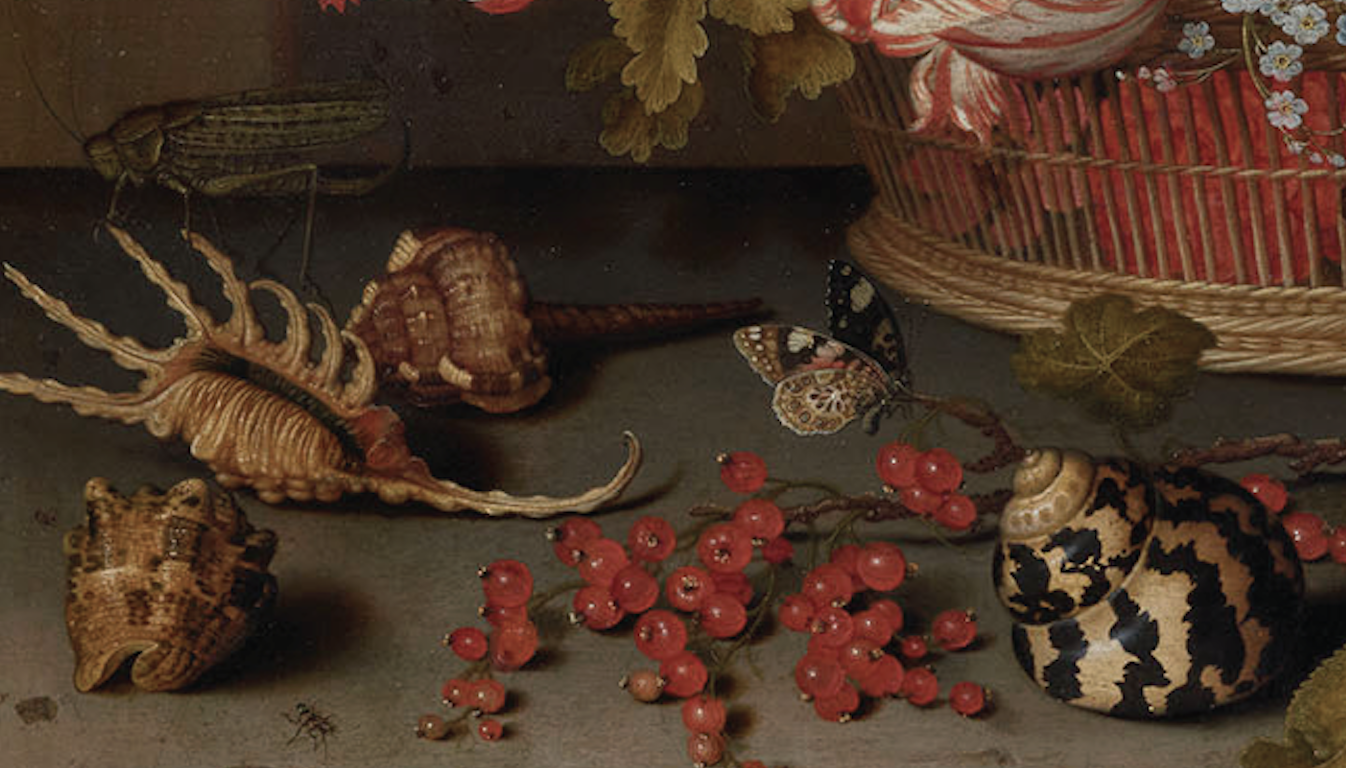
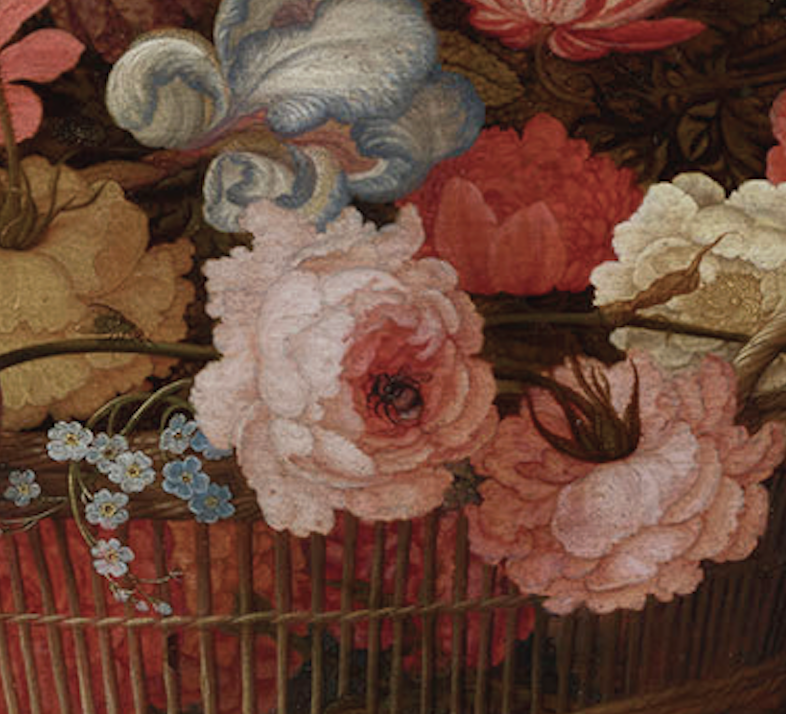
A Still Life with a Basket of Flowers, Fruit and Shells
Oil on panel, 37 x 68 cm.
Framed dimensions: 56 x 87 x 4.3 cm.
Signed lower left: B vander ast
Balthasar van der Ast was one of the principal still-life painters of the early Dutch Golden Age, trained in Middelburg by his brother-in-law Ambrosius Bosschaert the Elder and active thereafter in Utrecht and Delft. The present panel shows a basket of flowers and fruit set on a ledge, with shells and insects placed around it, in the long horizontal format he favoured for such compositions. The painting can be traced to the collection of Orazio Canossa in Mantua by 1673 and remained with the Canossa family in Verona until 2001. A rare instance of a Dutch still life with a continuous Italian provenance of more than three centuries.
Provenance.
Orazio Canossa (d. 1673), Palazzo Canossa, Mantua; recorded in the inventory of his collection, 15 May 1673, as hanging in one of the rooms towards the courtyard: “Un quadretino bislongo su l’asse con cornice di pero nero sopra del quale vi sono dipinti varii fiori et fruti di mano del Vander fiamengo con zendalina verde da coprirlo vechia e rotta con bachetta di ferro”;
By inheritance to his brother Luigi Canossa (c. 1629 to 1681), Verona; possibly the work in his posthumous inventory, 11 August 1687, no. 297, in the third room facing the Adige: “uno detto frutere et fiori”;
Thence by descent; recorded in the Canossa inventory of 18 September 1781, no. 44, in the first room of the gallery facing the Adige: “Un quadro fiori in asse di B. Vanderast”; still in the collection in 2001;
With Quadrifolio, Milan, 2005;
With Johnny Van Haeften Ltd, London, 2005;
Private collection, England, 2005 to the present
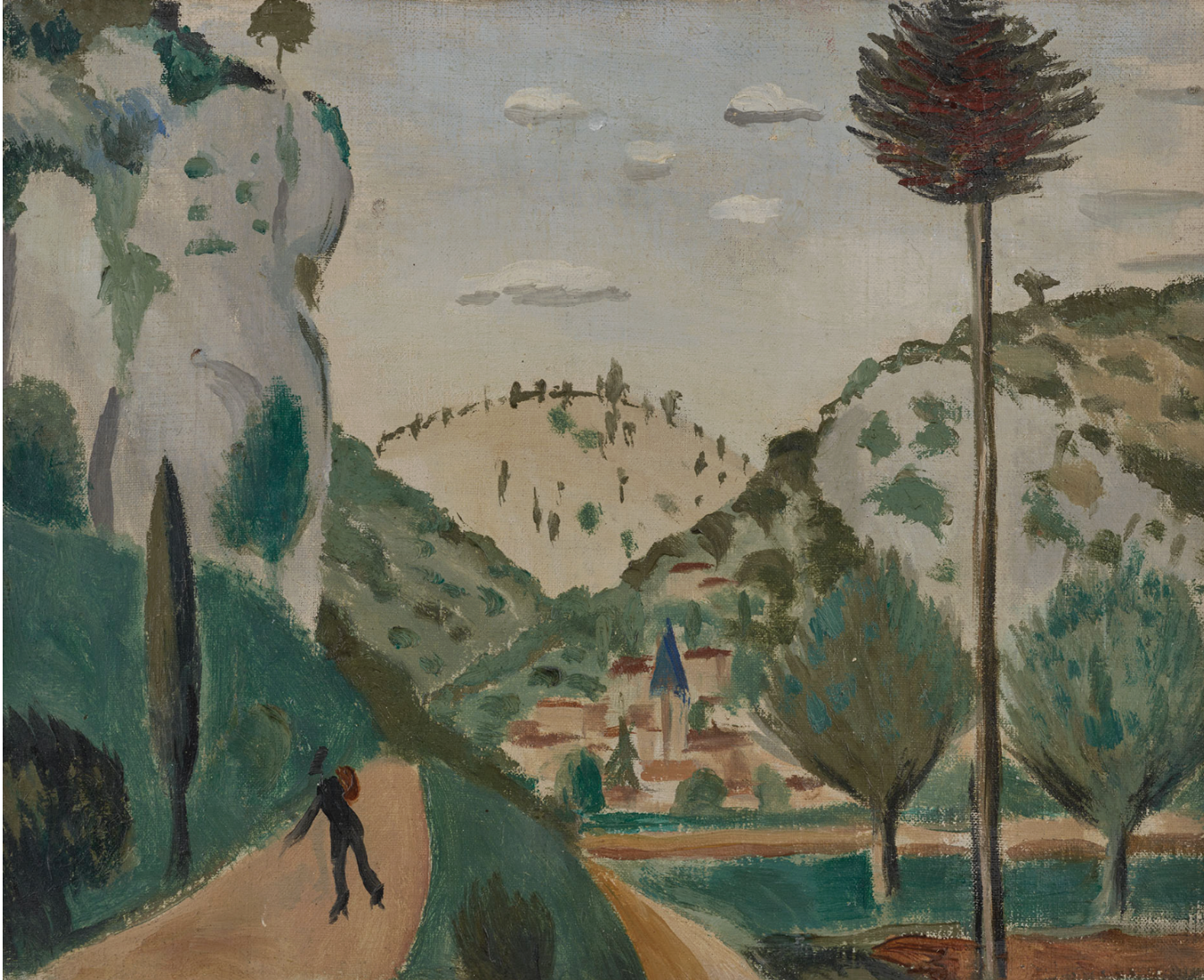
André Derain (1880-1954)
La route des Vers
Executed in 1912.
Oil on canvas, 22.4 × 27.3 cm.
Signed on the reverse: A. Derain
André Derain was, with Matisse, one of the founders of Fauvism, the group whose high-coloured canvases caused the scandal of the Salon d’Automne in 1905. By 1912, however, he had turned towards a quieter manner, with Cézanne and the early Italians in mind, and in the summer of that year he painted at Vers, a village on the river Lot.
Provenance.
Galerie Kahnweiler, Paris;
Acquired from the above by the family of the previous owner;
Sotheby's, London, Impressionist & Modern Art Day Sale, 23 June 2011, lot 346.
Exhibitions.
Paris, Musée de l'Orangerie des Tuileries, Derain, 1954-55, no. 32 (titled 'Paysage');
Hagen, Osthaus Museum, European Avant-Garde: Painting in the Focus of Modernity, 29 September 2023 - 7 January 2024.
Literature. M. Kellermann, André Derain: Catalogue raisonné de l'œuvre peint, 1895-1914, vol. I, Paris, 1992, p. 211 (illustrated p. 130); Avant-Garde and Europe / Avantgarde und Europa, exh. cat., Hagen, 2023, pp. 9, 44-45, illustrated.
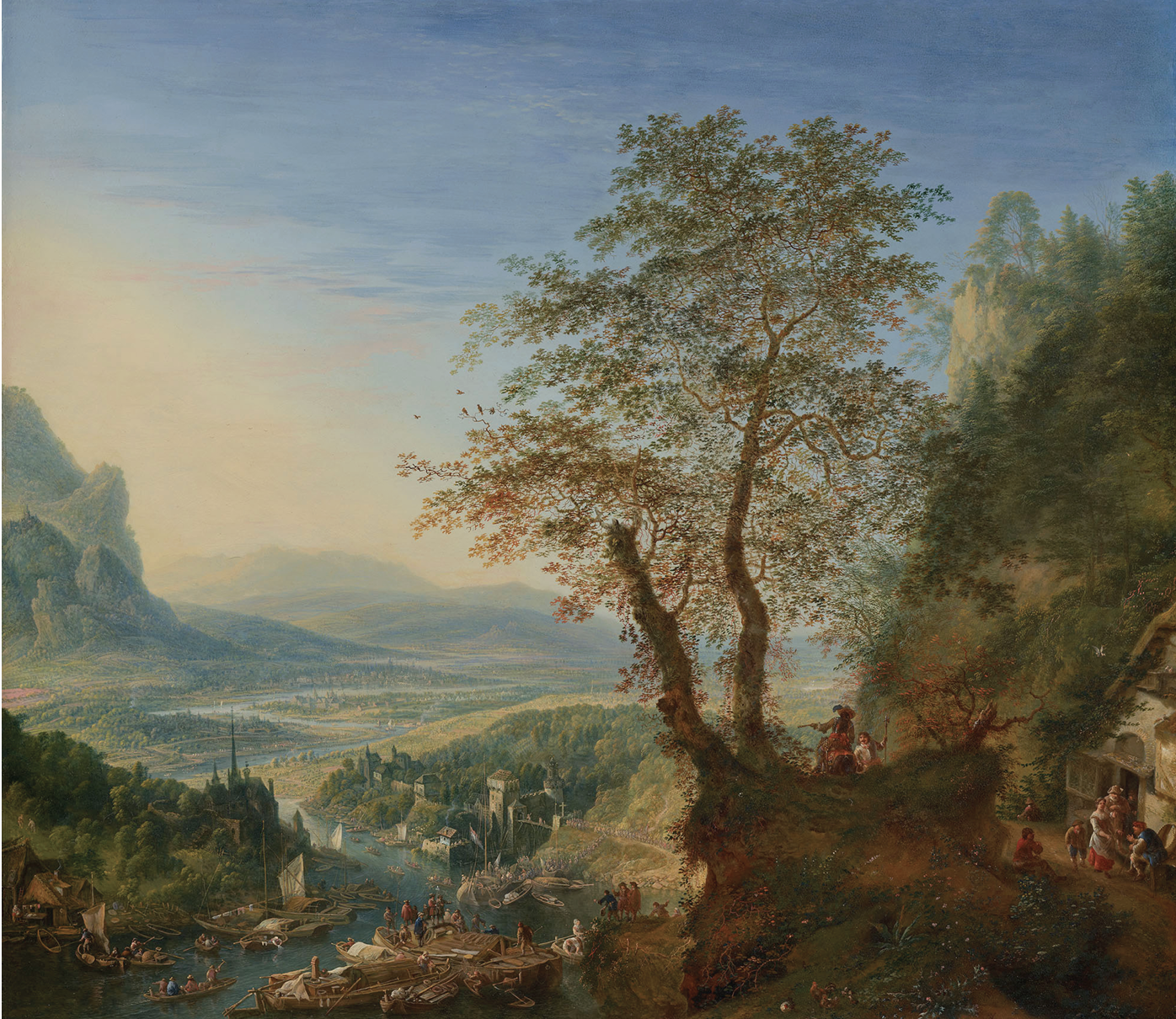
Jan Griffier the Elder
(Amsterdam 1645/52 - 1718 London)
An extensive Mosan capriccio river landscape, with moored boats and groups of figures.
Oil on copper, 52.8 × 59.7 cm.
Signed lower right: J. GRiFFiER
Jan Griffier the Elder was a Dutch landscape painter who spent most of his career in England, having settled in London around 1667, and who is known for views of the Thames and for imaginary river landscapes in the manner of Herman Saftleven. The present picture, painted on copper and unusually large for that support, belongs to the years around 1700 when he was living again in Holland. It shows a broad river winding between cliffs, with boats moored along the bank and groups of figures on the shore, the whole composed in the manner of a capriccio rather than a record of any particular place. It later hung at Wendhausen Castle in Lower Saxony, in the collection of the Vieweg publishing family, until the sale of Helene Tepelmann’s pictures at Lempertz in 1940. Comparable in scale and support to the group of coppers by Griffier acquired by Prince Eugene of Savoy, many of which are now in the Galleria Sabauda, Turin.
Provenance. Helene Tepelmann, née Vieweg (d. 1939), Wendhausen Castle, Lower Saxony; her posthumous sale, Lempertz, Cologne, 1 February 1940, lot 39; Private collection, Germany, acquired at the above sale, and thence by descent to his son; Anonymous sale, Sotheby's, London, 6 December 1995, lot 3.
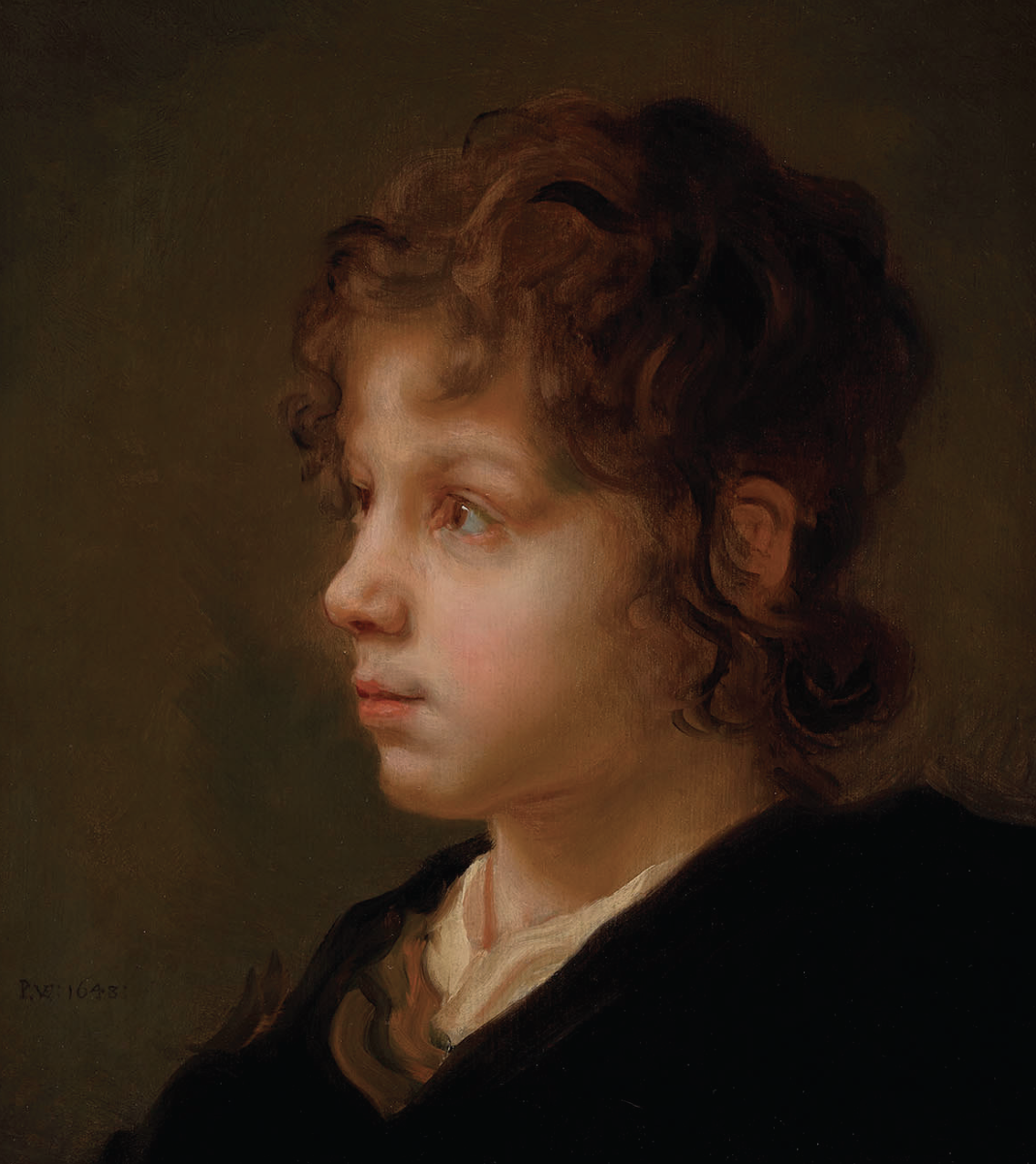
Pieter Harmensz Verelst
(Dordrecht 1618-1678)
Head of a Boy
Executed in 1648.
Oil on panel, 36.5 × 33 cm.
Signed lower left: P.VE.: 1648 ('VE' in ligature)
Pieter Harmensz Verelst trained in Dordrecht, possibly with Benjamin Gerritsz. Cuyp and settled in The Hague in 1643, where he was among the founders of the painters’ confraternity Pictura. His work consists mainly of genre scenes and portraits of single figures in the manner of the young Rembrandt, and he was the father of Simon and Herman Verelst, both of whom later worked in England. The present panel, signed and dated 1648, shows a boy in profile against a plain brown ground, his curly hair and dark coat loosely brushed and the face modelled with care. The sitter has not been identified, although it has been suggested that he is the artist’s eldest son, Herman, born in 1641, who would have been seven at the time. A rare example of a child’s portrait in Verelst’s work.
Provenance.
Anonymous sale, Lepke, Berlin, 29 March 1927, lot 55;
Anonymous sale, Christie's, London, 13 December 2000, lot 49, where acquired on behalf of the previous owner.
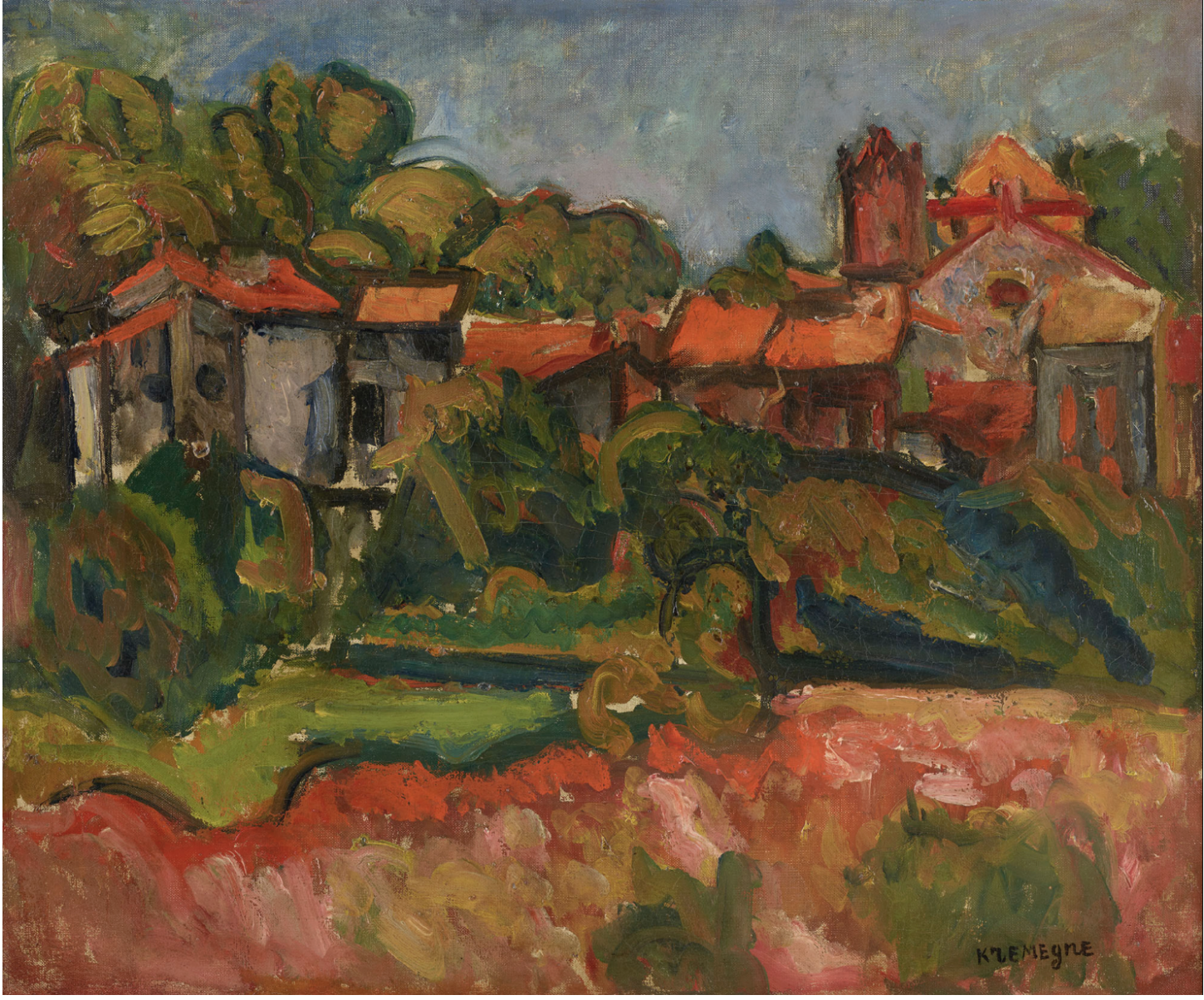
Pinchus Krémègne
(1890 - 1981)
Paysage
Circa 1920.
Oil on canvas, 54.4 × 65 cm.
Signed lower right: Kremegne
Provenance.
Galerie Brame & Lorenceau, Paris;
Anon. sale, Sotheby Parke Bernet Inc., New York, 11 December 1980, lot 31;
Anon. sale, Christie's New York East, 9 May 1992, lot 77;
Christie's, London, South Kensington, Sale 5851, Impressionist & Modern Art, 25 November 2009, lot 14.
Exhibitions.
Hagen, Osthaus Museum, European Avantgarde - Painting in the Focus of Modernity, 29 September 2023 - 7 January 2024.
Literature.
Avant-Garde and Europe / Avantgarde und Europa, exh. cat., Hagen, 2023, p. 64, illustrated.